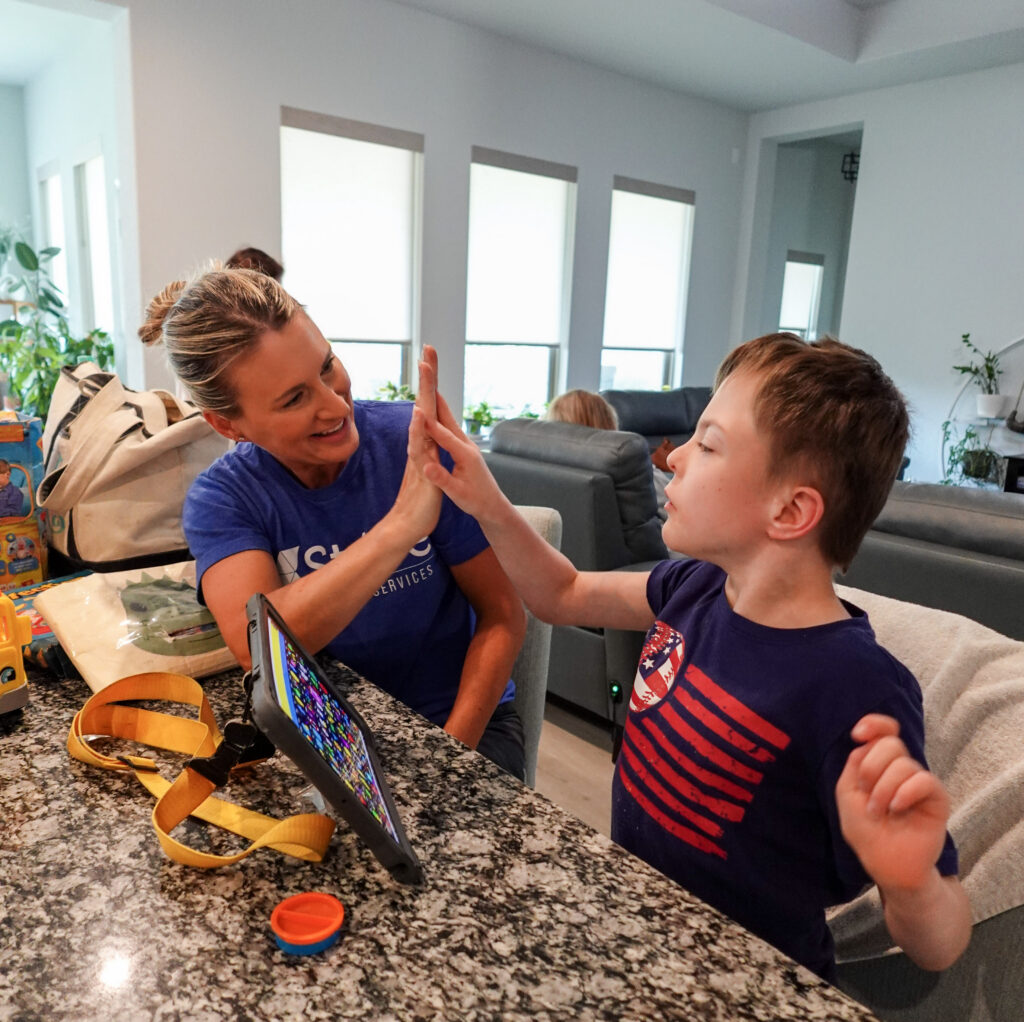
For the past three years, this remarkable young patient and his family have been a valued part of the Strive community. Working alongside Speech-Language Pathologist Kate Wilde, they have celebrated pediatric therapy progress that goes far beyond simple words, from overcoming complex feeding challenges to discovering new ways to communicate, connect, and express himself through Augmentative and Alternative Communication (AAC).
Overcoming Early Challenges: From Medical Milestones to Feeding Success
Beginning speech and feeding therapy starts with identifying what uniquely drives a child. Early on, the primary focus centered on finding his strongest motivators. Discovering play activities that brought him joy helped him feel empowered to participate and learn.
Alongside communication, specialized feeding therapy formed a major pillar of his care plan. Following an extensive early medical journey that included tracheal reconstruction surgery, he faced a complex task. He needed to learn how to safely move, chew, and swallow solid food after relying on alternative nutrition.
“When I first started with him, he would not put a solid piece of crunchy food in his mouth,” Kate recalls. “Now he will let me place it on his molars, and he will chew it and swallow it.”
His feeding journey has been one of the achievements Kate is most proud of. Having started therapy with a G-tube and significant swallowing difficulties, he worked hard to develop oral motor skills and physical strength. Today, he explores new food textures and even uses his AAC device to request his favorites: “Dad, I want a hamburger or cheeseburger.”
From One Word to Full Sentences: AAC and Expressive Language Growth
His functional communication has grown just as meaningfully. What once looked like repetitive, isolated words has developed into intentional interaction. He now uses full sentences, direct requests, manual sign language, and messages aimed directly at the people he loves.
One milestone that stands out happened when he began communicating his desire to go for a car ride. His request grew from “Dad, I want to go bye-bye red car” into longer, more complex thoughts like “Mom and Dad, I want to go see Grandad red car.” Today, he spontaneously uses his speech device to say “Dad, happy birthday,” and signs “I love you” to his Grandad during video calls.
More Than Milestones: Building Trust and Functional Communication
For his parents, the most meaningful shift has been seeing him view his AAC device as his authentic voice.
“He has been using AAC for about three years, but he really started using it meaningfully within the past year,” his parents shared. “It used to just be a device like a phone. Now he uses it as a serious thing and not just a play toy.”
Kate notes that his personality makes every pediatric speech session special.
“He is just a character. He is so smart,” she says. “He is pretty savvy, and he has a lot of strengths. He is a very good AAC user and can use it for functional and novel communication.”
Meeting him where he is remains the key to success. When therapy goals tie into his favorite play routines, he is far more motivated to participate, communicate, and learn.
A Partnership Built on Trust: The Role of Parent Involvement
His family credits the strong relationship built with Kate as an essential driver of his progress. Knowing when to gently challenge a child while honoring their comfort level creates an optimal environment for growth.
“Kate knows when to push him and when to know he needs a few minutes to himself and try again,” his parents said. “The connection with him matters more than the milestones. Without a good connection, you’re not going to hit any milestones.”
That trust has opened the door to continuous growth. A child who once pushed away unfamiliar foods now approaches family members to sample their meals. A child who once struggled to share his thoughts now uses his device to guide conversations.
Advice for Families Starting Speech and Feeding Therapy
For parents embarking on a similar therapeutic journey, his family and care team offer three key insights:
- Prioritize the Relationship First: Allow time for your child and clinician to build mutual trust. Lasting developmental milestones naturally follow a strong bond.
- Practice Daily at Home: Consistently using AAC tools and feeding techniques at home accelerates progress outside the clinic.
- Advocate for Your Child: Active parent participation aligns therapy goals with your child’s unique personality and daily needs.
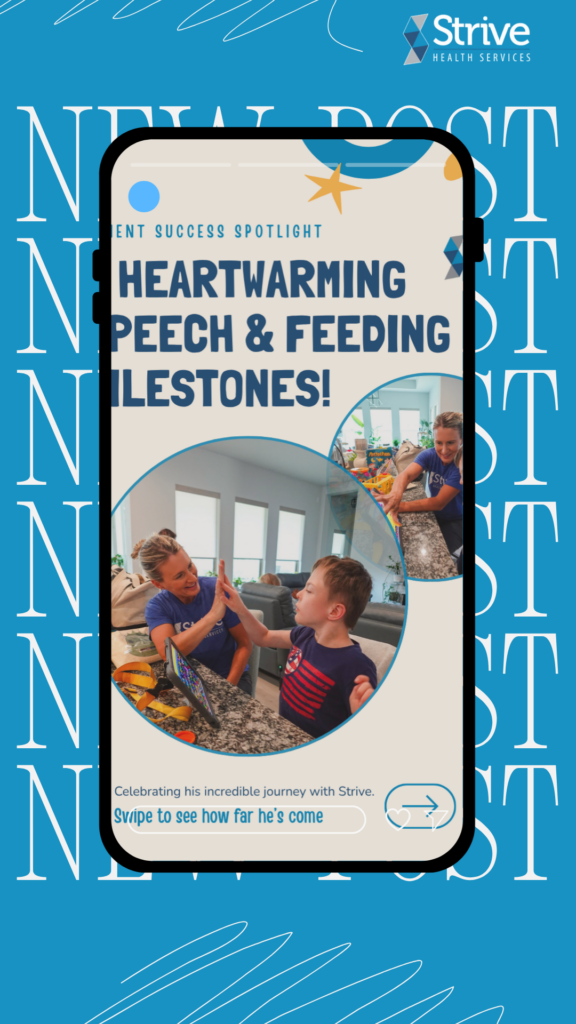
See His Journey in Action: 3 Heartwarming Speech & Feeding Milestones!
Want a closer look at the moments that made this story so inspiring? Head over to our social media pages to view our featured carousel post, 3 Heartwarming Speech & Feeding Milestones! You will see highlights of his progress, helpful insights on AAC device usage, and celebratory moments shared with his care team.
Discover Speech and Feeding Therapy Services at Strive
Every child’s developmental journey is unique. At Strive, our compassionate speech-language pathologists provide individualized pediatric care tailored to your family’s needs. Whether your child requires support with AAC device implementation, sensory feeding therapy, or expressive language development, our team supports you every step of the way.
To learn more about our pediatric therapy services or schedule a consultation:
- Call Us: (512) 688-5694
- Visit Us Online: www.strivehs.com